
Cyclical mood crashes, migraines, bloating - they might be allopregnanolone sensitivity, E2 sensitivity, or both. Here's the breakdown.
Allopregnanolone sensitivity = your brain's GABA receptors react paradoxically to the normal progesterone metabolite, allopregnanolone. Symptoms hit hard in the luteal phase (7-10 days before your period): anxiety, rage, depression, insomnia.
E2 (estradiol) sensitivity = your tissues overreact to normal estradiol levels, typically in the follicular phase and around ovulation. Migraines, breast tenderness, bloating, heavy periods - symptoms tied to rising or surging estrogen, often with a histamine overlap.
The key diagnostic difference is timing: luteal phase = allopregnanolone sensitivity; follicular/ovulatory phase = E2 sensitivity.
Both can be amplified by OAT axis dysfunction
Diet can meaningfully support both: magnesium and B6 for allopregnanolone, DIM and calcium D-glucarate for estradiol
Two Conditions, One Confusing Symptom Picture
You've tracked your cycle. You've noticed the pattern. Every month, something shifts - but when exactly it shifts, and what it feels like, isn't quite the same as what you've read about PMS.
Maybe your worst days are the week before your period: panic, insomnia, rage that seems out of proportion to anything that actually happened. Or maybe it's worse around ovulation - the migraines, the bloating, the breast tenderness. Or both, at different points in the same cycle.
Here's what most hormone content doesn't tell you: these two experiences have different biological roots. Luteal phase mood chaos and follicular/ovulatory physical symptoms are driven by distinct mechanisms. Treating them the same way doesn’t always work.
The two mechanisms are allopregnanolone sensitivity and E2 (estradiol) sensitivity. Understanding which you're dealing with - or whether you have elements of both - changes what you do about it.
What is allopregnanolone sensitivity?
Allopregnanolone (ALLO) is a neurosteroid - a metabolite your body makes from progesterone - that crosses the blood-brain barrier and directly calms your nervous system by modulating GABA-A receptors. GABA is the brain's primary braking system. In most women, allopregnanolone acts like a natural anxiolytic: as progesterone rises in the luteal phase, allopregnanolone rises with it, and the brain settles.
In women with allopregnanolone sensitivity, this doesn't happen. Instead of calming the brain, the rise and fall of allopregnanolone destabilizes it. Research from multiple groups, including studies at Johns Hopkins University, has shown that women with PMDD have normal hormone levels - the problem is that their GABA-A receptors respond paradoxically to the metabolite's normal fluctuations.
The mechanism involves a change in receptor composition. In susceptible women, exposure to allopregnanolone in the luteal phase triggers upregulation of the α4 subunit of the GABA-A receptor. α4-containing receptors are less sensitive to allopregnanolone's calming signal. The result is unopposed anxiety and mood dysregulation precisely when the system should be winding down.
This is why progesterone supplements often don't help these women, and sometimes make things worse. More progesterone means more allopregnanolone - more of the very thing the brain is reacting to. The problem isn't the amount of hormone. It's the receptor.
Symptoms of allopregnanolone sensitivity
Symptoms appear strictly in the luteal phase - roughly 7-10 days before your period - and resolve within 1-2 days of bleeding starting:
Severe anxiety, panic attacks, or a feeling of internal dread
Rage or irritability that feels neurologically driven (disproportionate to circumstances)
Depression, emotional numbness, or flat affect
Insomnia or fragmented, non-restorative sleep
Brain fog and difficulty concentrating
Complete or near-complete recovery in the follicular phase
The cyclical resolution is the clearest diagnostic signal. If you feel like a different person in weeks 1-2 of your cycle, and the luteal phase reliably dismantles that, allopregnanolone sensitivity is worth exploring.
What is E2 (estradiol) sensitivity?
Estradiol sensitivity is a different kind of problem: not how your brain metabolizes a progesterone byproduct, but how your tissues respond to estrogen itself. Two women can have identical serum E2 levels - say, 150 pg/mL in the follicular phase - and one feels fine while the other has a splitting migraine, swollen breasts, and three pounds of water weight. That difference lives in receptor sensitivity, genetic variants in estrogen-metabolizing enzymes (COMT, CYP19A1), and how efficiently each woman clears estrogen metabolites.
This is not the same as estrogen dominance. Estrogen dominance is a ratio problem - too much estrogen relative to progesterone. Estradiol sensitivity is a receptor-level phenomenon: your tissues overreact to estrogen even when the ratio is balanced and your absolute levels are within normal range.
A critical amplifier is histamine. Estradiol directly stimulates mast cells to release histamine, while simultaneously downregulating the two enzymes that break histamine down (DAO and COMT). Histamine then stimulates further estrogen production, creating a feed-forward loop. Women with E2 sensitivity often notice that histamine-rich foods - aged cheeses, wine, cured meats, fermented foods, leftovers - become hard to tolerate during the follicular and ovulatory phases specifically. That's the E2-histamine loop in action.
Symptoms of E2 sensitivity
Symptoms peak in the follicular phase (days 5-13) and around ovulation (day 12-14):
Cyclical migraines that follow estrogen surges or drops
Breast tenderness or engorgement
Bloating and water retention (2-5+ lbs)
Heavy menstrual bleeding
Follicular phase anxiety or mood swings
Skin flares, acne, or flushing during ovulation
Heightened sensitivity to histamine-rich foods in the first half of the cycle
If your worst symptoms hit before ovulation and calm down once you're solidly in the luteal phase, E2 sensitivity is the more likely driver.
The Key Diagnostic Difference: It's All In The Timing
The fastest way to start separating these two conditions is a detailed symptom diary across two or three full cycles. Map every significant symptom - mood crashes, headaches, bloating, sleep quality, breast tenderness - against your cycle day. The pattern that emerges is more informative than most lab panels.
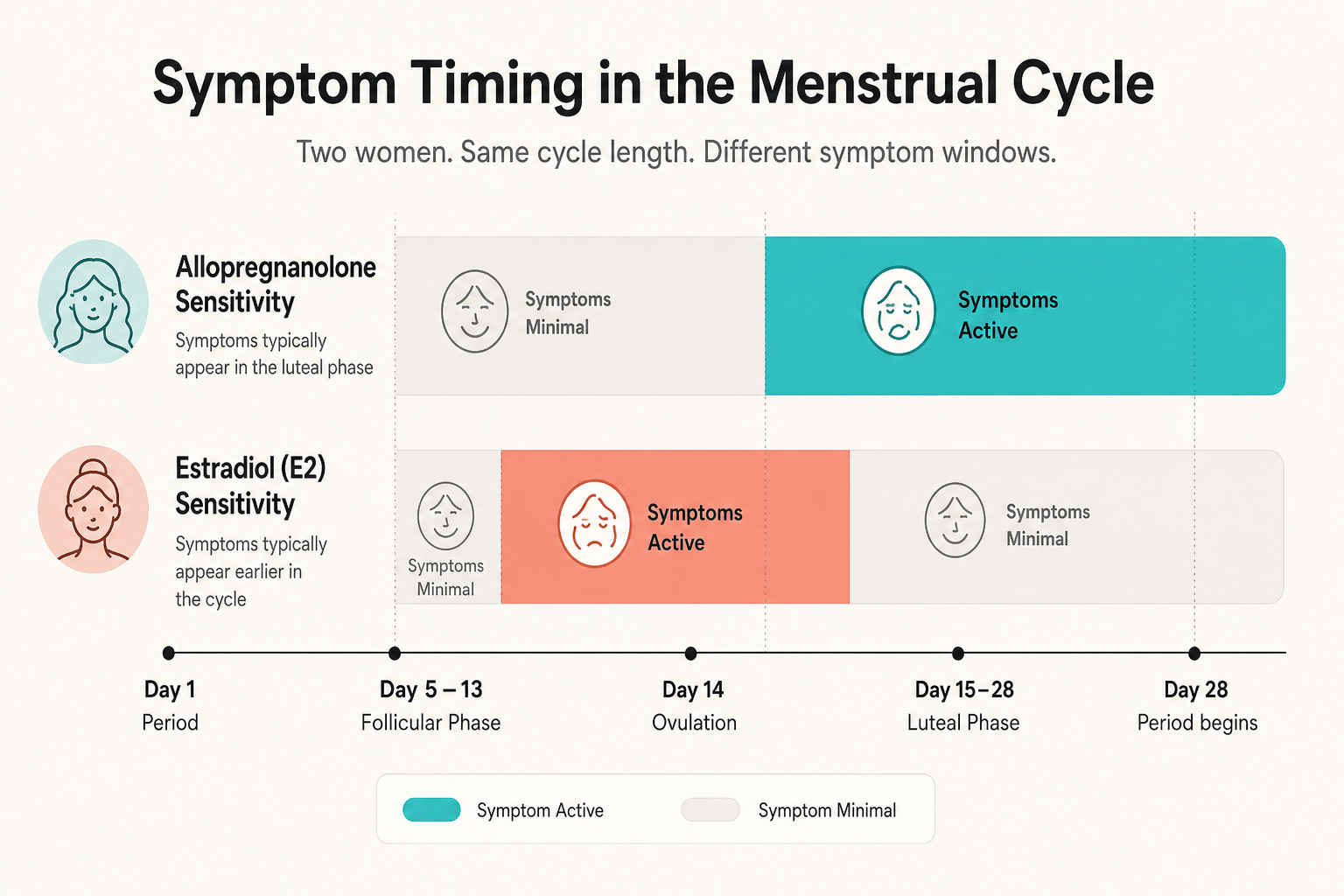
Allopregnanolone sensitivity:
Dominant symptoms: mood (anxiety, depression, rage)
Symptoms peak during luteal phase (~ days 14-28)
Hormone levels on labs are usually normal
Symptoms often worsen with progestins (paradoxical reaction)
Histamine foods are not problematic
Symptoms often improve with cycle suppression
Symptoms often resolve during menses
E2 (estradiol) sensitivity:
Dominant symptoms: physical (migraines, bloating, breast tenderness or pain)
Symptoms peak during follicular phase or ovulation (~ days 2-14)
Symptoms do not typically worsen with progestins
Histamine foods can be problematic, especially during follicular phase
Response to cycle suppression can vary
Symptoms often resolve after ovulation into luteal phase
Some women will see symptoms in both phases. This doesn't mean the diagnosis is unclear - it means both mechanisms are active.
Where The OAT Axis Fits In
The Ovarian-Adrenal-Thyroid (OAT) axis is the hormonal framework Dr. Kathy uses to assess women's hormone health - and it can matter enormously to both conditions discussed here. These aren't three separate systems running in parallel. They're a closely coupled network, and a problem in any one of them echoes through the others.
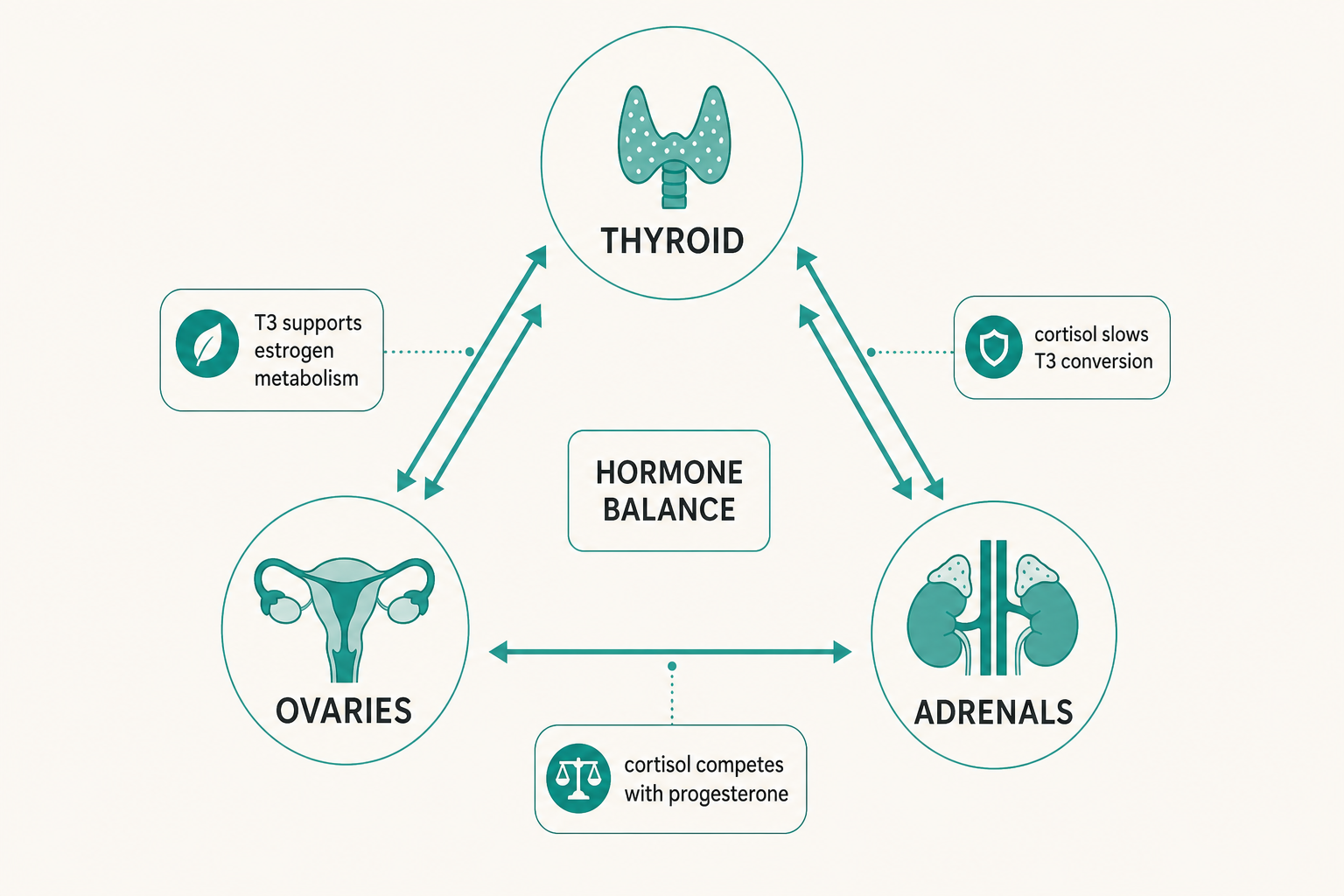
The cortisol-progesterone connection
When chronic stress is high, your adrenal glands need more cortisol. Both cortisol and progesterone are made from the same precursor - pregnenolone. Under sustained demand, pregnenolone gets diverted toward cortisol production at the expense of progesterone. This is sometimes called pregnenolone steal or cortisol steal. Less progesterone means less allopregnanolone - and the fluctuation that remains can be more destabilizing rather than less, because the baseline has dropped. Women under high chronic stress often find their luteal phase symptoms worsen dramatically.
Cortisol also directly primes mast cells, suppresses the enzymes that metabolize histamine, and disrupts the microbiome in ways that increase enterohepatic estrogen recirculation. In other words: sustained stress makes both allopregnanolone sensitivity and E2 sensitivity worse simultaneously.
The thyroid factor
Thyroid hormones influence reproductive function in multiple ways. Even subclinical hypothyroidism (TSH mildly elevated, T3/T4 still within range) can increase sex hormone binding globulin (SHBG), which changes how much estradiol is freely available to tissues. It also slows the liver's estrogen clearance pathways, leading to higher cumulative estrogen exposure and more pronounced E2 sensitivity symptoms.
This is why women whose cyclical symptoms don't respond fully to targeted hormone support often have subclinical thyroid or adrenal contributions that haven't been addressed. The OAT axis is why you can't treat any one of these systems in isolation and expect lasting change.
Supporting Allopregnanolone Sensitivity Through Diet and Lifestyle
Since allopregnanolone sensitivity is fundamentally a GABA-A receptor issue driven by neurosteroid fluctuations, the dietary and lifestyle goal is to stabilize GABA tone and reduce the stress that amplifies the paradoxical response.
Magnesium is a cofactor in GABA synthesis and acts as a natural NMDA receptor antagonist - essentially calming neuronal excitability through a complementary pathway to GABA. Glycinate is the preferred form because it crosses the blood-brain barrier more effectively than other forms and is less likely to cause digestive upset.
Vitamin B6 in its active P5P form is a cofactor for the enzyme that converts glutamate (excitatory) to GABA (calming). Some research suggests that B6 can reduce luteal phase mood and anxiety symptoms.
Reducing or eliminating alcohol in the luteal phase is under-appreciated. Women with allopregnanolone sensitivity often notice that a glass of wine in the luteal phase reliably worsens their worst days, even if it didn't used to.
Adaptogens that support the HPA axis can help by reducing the cortisol burden that aggravates allopregnanolone sensitivity through the pregnenolone steal pathway.
Seed cycling in the luteal phase (flax and sesame seeds, which support progesterone through lignans and zinc) is a lower-evidence but low-risk option for supporting progesterone production naturally. The benefit in allopregnanolone sensitivity specifically is uncertain, but supporting progesterone stability (rather than provoking fluctuation) is conceptually consistent with the underlying mechanism.
Lifestyle factors such as sleep is non-negotiable. GABA-A receptor sensitivity worsens with sleep deprivation - the same receptors that struggle to respond to allopregnanolone also regulate sleep. Protecting 7-9 hours of sleep in the luteal phase, keeping a consistent sleep-wake time, and reducing screen light in the evening are among the highest-yield interventions.
Supporting E2 (Estradiol) Sensitivity Through Diet and Lifestyle
For E2 sensitivity, the goal is to improve estrogen metabolism and clearance, calm the histamine-estrogen feedback loop, and support the liver's capacity to process and excrete estrogen metabolites.
DIM (Diindolylmethane) is the active metabolite of indole-3-carbinol, found in cruciferous vegetables - broccoli, cauliflower, cabbage, Brussels sprouts. DIM supports the 2-OH estrogen metabolite pathway, encouraging the liver to produce the more protective, less proliferative estrogen metabolites rather than the more estrogenic 16-OH pathway. For women with E2 sensitivity, loading more cruciferous vegetables into the follicular phase (when estrogen is rising) is a reasonable dietary strategy.
Calcium D-glucarate works through a different pathway: it inhibits beta-glucuronidase, an enzyme produced by certain gut bacteria that reactivates estrogen conjugates in the intestine for reabsorption. By keeping beta-glucuronidase activity lower, calcium D-glucarate reduces the amount of estrogen that gets recirculated back into the bloodstream after the liver has already packaged it for excretion. Less recirculation means lower total estrogen load and fewer sensitivity symptoms.
Fiber supports the same goal. 25-35 grams of daily fiber - particularly from vegetables, legumes, and ground flaxseed - binds estrogen conjugates in the gut and helps carry them out before beta-glucuronidase can reactivate them. It also feeds the beneficial gut bacteria that keep beta-glucuronidase activity in check.
A low-histamine approach in the follicular phase makes an immediate difference for women who have the E2-histamine overlap. This means reducing fermented foods, aged cheeses, cured and processed meats, alcohol, leftovers left longer than 24 hours, and high-histamine fish (tuna, mackerel, anchovies) in the 10-14 days before ovulation.
Liver support through dandelion root tea or milk thistle (silymarin) helps maintain the Phase I and Phase II detoxification capacity the liver needs to process estrogen efficiently.
Reducing xenoestrogen exposure removes an additional burden on the same processing system: switching to glass food storage, avoiding plastic food containers heated in the microwave, choosing clean personal care products, and filtering drinking water all reduce the dietary and environmental estrogen load.
Lifestyle Support For Both Conditions
Several interventions benefit both mechanisms:
Cycle syncing - adjusting exercise intensity, social commitments, and food choices to match the energy and hormonal demands of each cycle phase - reduces the friction that amplifies both types of sensitivity.
Stress management and cortisol reduction is not optional for either condition. The OAT axis connections described above mean that without addressing stress, dietary interventions and supplementation only go so far. Practices that genuinely lower HPA axis reactivity - consistent sleep, time in nature, breath work, yoga, reducing chronic over-scheduling - translate directly into better hormone balance.
When To Work With a Practitioner
Diet and lifestyle can shift the needle meaningfully - but if your symptoms persists and significantly disrupt your ability to work, maintain relationships, or function day to day, a systematic assessment by a practitioner who understands hormone sensitivity is worth doing rather than spending months experimenting alone.
Comprehensive hormone testing - including the DUTCH test to assess estrogen metabolite pathways, cortisol patterns, and GABA markers - sometimes gives a clearer map than serum estradiol alone. A detailed intake that maps symptom timing against cycle phase, combined with targeted lab work, can identify whether you're dealing with allopregnanolone sensitivity, E2 sensitivity, OAT axis dysfunction, or some combination - and which interventions to prioritize.
The "normal isn't always normal" principle applies here: a serum estradiol within reference range doesn't rule out sensitivity, and a progesterone level that looks fine doesn't rule out allopregnanolone receptor dysregulation. What matters is how your specific body responds to normal hormone fluctuations - and that requires context, not just numbers.
Dr. Kathy Nguyen
Dr. Kathy Nguyen is a Naturopathic Doctor in Ontario who has a focus in women's hormone health, with a focus on the OAT axis framework - looking at the ovaries, adrenals, and thyroid together rather than in isolation. She works with women who are dealing with cyclical symptoms, unexplained mood shifts, or conditions like PMDD, irregular periods, and thyroid imbalance that haven't fully resolved with conventional approaches.
For women navigating allopregnanolone or estradiol sensitivity specifically, her approach includes comprehensive hormone panel testing, DUTCH test analysis, detailed cycle mapping, and personalized treatment plans that address the whole hormonal picture. Free 15-minute e-consults are available through Jane App.
Frequently Asked Questions
What is the difference between allopregnanolone sensitivity and PMDD?
PMDD (premenstrual dysphoric disorder) is the clinical diagnosis. Allopregnanolone sensitivity is the proposed neurobiological mechanism behind it. Research shows that women with PMDD don't necessarily have abnormal hormone levels - instead, their GABA-A receptors respond paradoxically to the normal rise and fall of allopregnanolone in the luteal phase, triggering severe mood symptoms. Not every woman with allopregnanolone sensitivity meets full PMDD diagnostic criteria, but most have significant luteal phase mood disruption. Understanding the mechanism helps guide treatment beyond what a diagnosis label alone can offer.
Can I have both allopregnanolone sensitivity and estradiol sensitivity at the same time?
Yes. The OAT axis - the hormonal network connecting your ovaries, adrenals, and thyroid - plays a role in both conditions, dysfunction in one area tends to affect multiple hormonal systems. A woman could have elevated estrogen driving follicular-phase histamine reactions (E2 sensitivity) while also having a GABA-A receptor sensitivity to allopregnanolone fluctuations in the luteal phase. Cycle tracking across multiple months is one of the best way to map which symptoms belong to which phase.
What tests can identify allopregnanolone or estradiol sensitivity?
There is no single blood test for either condition. Allopregnanolone sensitivity is diagnosed primarily through symptom timing - strict luteal-phase mood crashes with follicular recovery - alongside response to treatment. For estradiol sensitivity, a DUTCH test (Dried Urine Test for Comprehensive Hormones) can reveal estrogen metabolite patterns (2-OH vs. 4-OH vs. 16-OH pathways), methylation efficiency, and phase II detox capacity, which together paint a clearer picture than serum estradiol alone. A detailed cycle symptom diary tracked over 2-3 months is often the most informative first step before any lab testing.
Does diet alone help with hormone sensitivity, or do I need medication?
For mild to moderate cases, dietary and lifestyle interventions can make a meaningful difference - particularly magnesium glycinate and vitamin B6 for allopregnanolone sensitivity, and DIM, calcium D-glucarate, and a low-histamine approach for estradiol sensitivity. However, severe PMDD, extreme cyclical migraines, or symptoms that significantly disrupt daily functioning often benefit from working with a practitioner who can layer in targeted supplementation, hormone support, or in some cases medication. The goal with naturopathic care is to address root cause - so diet isn't a workaround; it's foundational. Starting there often reduces how much else is needed.
How does the OAT axis affect allopregnanolone and estrogen sensitivity?
The OAT (Ovarian-Adrenal-Thyroid) axis means your ovaries, adrenal glands, and thyroid are in constant communication. Chronic stress causes cortisol to compete with progesterone for the same precursor molecule (pregnenolone), reducing the progesterone available to convert to allopregnanolone - which can then worsen GABA-A receptor instability. Elevated cortisol can also suppresses thyroid function, and thyroid hormones in turn influence SHBG levels, estrogen clearance, and even GABA metabolism. This is why treating hormone sensitivity in isolation - just targeting the ovaries, for example - often falls short. The whole axis needs attention.