
Unexplained weight gain, persistent fatigue, sugar cravings, brain fog, or irregular periods may not be isolated symptoms. These concerns can be connected through the complex relationship between insulin resistance, thyroid function, adrenal health, ovarian hormones, and inflammation.
In this blog, we explore how insulin resistance can act as a metabolic hub, creating ripple effects throughout multiple hormonal systems—and why looking at these connections may provide a clearer picture of your symptoms. Discover the warning signs to watch for and natural strategies that can support healthier insulin sensitivity and overall hormonal balance.
Your menstrual cycle is more than just your period. It’s a valuable window into your hormonal health. Cycle charting allows you to track signs such as basal body temperature, cervical mucus, and cycle length to better understand ovulation, fertility, and overall reproductive health.
Whether you're trying to conceive, experiencing irregular periods, or simply want to understand your hormones better, charting your cycle can reveal important patterns that blood work alone may not capture. In this blog, you'll learn how to track your cycle, identify ovulation, recognize signs of potential hormonal imbalances, and know when to seek professional support. Discover how understanding your body's natural rhythms can help you take a more informed and proactive approach to your health.
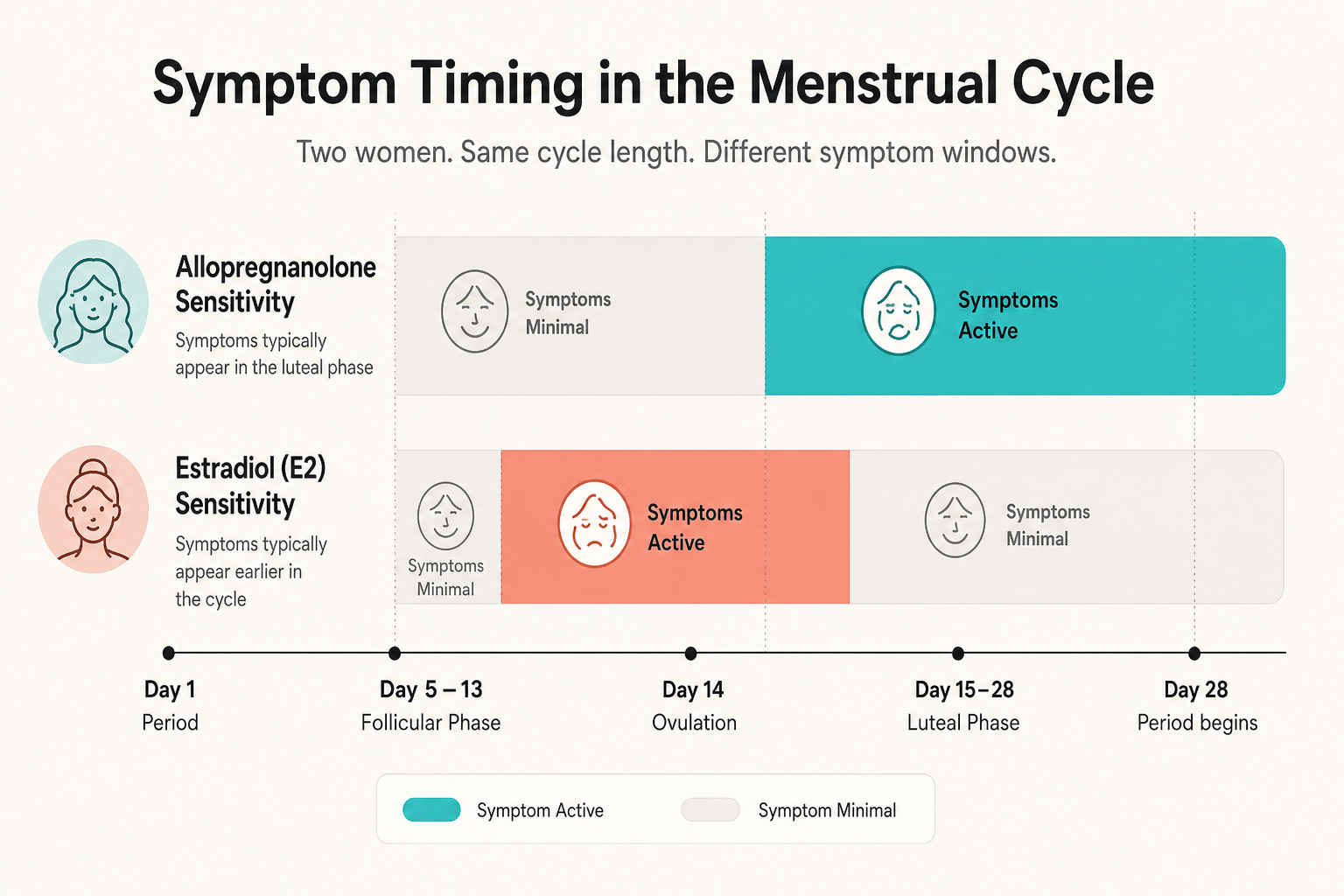
Women with hormone-related mood symptoms don't always have abnormal hormone levels—they may have hormone sensitivity instead. This blog explains the difference between allopregnanolone sensitivity (often linked to PMDD and progesterone intolerance) and estradiol sensitivity, and why distinguishing between them is key to effective treatment.
Learn how symptom timing throughout your menstrual cycle can help identify which hormone is driving your symptoms, and explore naturopathic strategies to support hormone balance and improve mood, sleep, and overall well-being.
PCOS has been officially renamed to Polyendocrine Metabolic Ovarian Syndrome (PMOS). This landmark shift in women’s health matters for your hormones and overall wellbeing.
For decades, millions of women have navigated a condition labeled "Polycystic Ovarian Syndrome" (PCOS), a name that often led to confusion, stigma, and delayed care. As of May 2026, a global consensus published in The Lancet has officially renamed this condition to Polyendocrine Metabolic Ovarian Syndrome (PMOS).
Do you ever feel like something is off with your body, but you cannot quite put your finger on it? Maybe you are exhausted no matter how much sleep you get, or your moods swing wildly from one moment to the next. Perhaps your periods have become unpredictable, or you are noticing changes in your skin and hair that seem to have appeared out of nowhere.
The Ovarian, Adrenals, and Thyroid (OAT) Axis plays a central role in women’s hormone health. When these three systems work in harmony, they regulate menstrual health, metabolism, fertility, mood, energy, and overall well-being. Disruption in any part of the OAT axis can lead to hormone imbalances and symptoms such as irregular periods, weight gain, or fatigue. In this article, we will talk about the OAT Axis in more detail, starting with the ovaries.
Emerging research reveals that HS is not simply just a skin disease. It's a complex condition involving metabolic dysfunction, hormonal imbalances, and chronic inflammation. Understanding these connections opens new doors for effective, root-cause treatment that goes far beyond topical creams and antibiotics.
For some, period pain is a minor inconvenience. For others, it's debilitating enough to cancel plans, miss work, or spend days curled up with a heating pad. The standard advice often stops at "take ibuprofen" or "use birth control." But what if you want natural solutions for PMS and painful periods that address the root cause, naturopathic medicine may be for you.
This guide explores evidence-based natural remedies you can start using today, plus how working with a Naturopathic Doctor in Ontario can help you find lasting relief.
January is typically the slowest time of the year for me in my clinical practice. It seems that people are trending away from New Year’s resolutions. Maybe it’s due to the winter blues or holiday burnout.
Instead, I see an uptick in visits during Spring. Spring goals align with biological, hormonal, and psychological shifts toward higher energy, better mood, and increased motivation, fostering a fresh start.
This guide explains the science behind spring hormonal changes and provides practical, evidence-based strategies to help you reclaim your energy. Whether you're dealing with persistent fatigue, mood swings, or just feeling "off," these naturopathic approaches can help you align with the season's natural renewal.
You wake up after eight hours of sleep feeling like you’ve barely rested. You rely on coffee to keep you somewhat energized throughout the day. Your body craves salty snacks and sugary treats. You have brain fog and difficulty focusing. If this sounds familiar, you might have encountered the term "adrenal fatigue" while searching for answers.
Here's the challenge: Our conventional medical system is not equipped to deal with adrenal fatigue. The Endocrine Society states clearly that no scientific proof exists to support adrenal fatigue as a true medical condition. Yet functional medicine practitioners and Naturopathic Doctors regularly work with patients experiencing these exact symptoms.
So what's really going on?
If you have been struggling with fatigue, mood swings, irregular periods, and weight gain, you might be dealing with an imbalance in your OAT axis. The Ovarian-Adrenal-Thyroid (OAT) axis represents one of the most important hormonal systems in a woman's body, yet it is often overlooked or treated in isolation in conventional medical care.
You feel tired everyday. Your hair is thinning, and that stubborn weight won't budge no matter what you try. You've been to your doctor. You’re told that your blood work is normal. You’re told that it’s probably all due to stress or that you need to just exercise more. But deep down, you know something isn't right.
If this sounds familiar, you're not alone. An estimated 12% of adults suffer from hypothyroidism, and up to 60% of people with thyroid disease don't even know they have it. Even more concerning, many who are aware of their condition continue to struggle with symptoms despite treatment.
Perimenopause and menopause are natural life transitions. They are not diseases to treat, deficiencies to correct, problems to solve, and having symptoms can be a sign of good health.
A naturopathic approach aims to honour our hormone transitions and to support our bodies through the changes. This means understanding what is happening in your body, addressing root causes, and building resilience through natural therapies, nutrition, and lifestyle adjustments.
If you have been experiencing irregular periods, unexplained weight gain, hirsutism, or persistent acne that refuses to respond to treatment, you may have wondered whether PCOS could be the cause.
The average patient waits several years and visits multiple doctors before receiving a proper diagnosis. And once diagnosed, the conversation often stops at oral contraceptives, with little exploration of why your body is struggling in the first place.
This is why more women across Ontario are turning to Naturopathic Doctors (NDs) for PCOS support. Not as a replacement for conventional care, but as a complement to it.
Lichen sclerosus is painful and is often associated with feelings of embarrassment, shame, overwhelm, anxiety, and more.
Because of these negative feelings, many women do not want to talk about their situation and often suffer in silence.