
Finding time for exercise can feel impossible when you are juggling work, family, and everything else life throws at you. But what if you did not need hour-long gym sessions to see real health benefits? Enter exercise snacks: short bursts of intentional movement spread throughout your day that can improve your cardiometabolic health, balance hormones, and support sustainable weight management.
Research published in 2025 shows these micro-workouts are not just a fitness fad. They are a science-backed strategy that works especially well for sedentary adults and those navigating hormonal changes. Let's break down what exercise snacks are, how they affect your body at the hormonal level, and how to start using them today.
What are exercise snacks?
Exercise snacks are brief, intentional bursts of physical activity lasting anywhere from 20 seconds to 5 minutes, performed multiple times throughout the day. Unlike traditional workouts that require blocking out 30 to 60 minutes, exercise snacks fit into the natural gaps in your schedule.
The concept is simple but specific. An exercise snack is not just randomly taking the stairs instead of the elevator (that is a lifestyle physical activity). Exercise snacks are planned, structured movements done with the specific intention of improving fitness. You might do squats at your desk, climb stairs for two minutes, or take a brisk 5 minute walk around the block after lunch.
The research typically defines exercise snacks as bouts lasting less than five minutes, performed at least twice daily on three or more days per week, for a minimum of four weeks. The intensity should be vigorous relative to your current fitness level, meaning you are breathing harder and your heart rate is elevated.
What makes this approach so accessible is that it removes common barriers to exercise. You do not need a gym membership, special equipment, or large blocks of free time. You can do exercise snacks in your office, living room, or even a bathroom stall if you need privacy. This accessibility is why studies show adherence rates of 91% for adults and 83% for older adults, significantly higher than traditional exercise programs.
The Hormone Connection: How Exercise Snacks Affect Your Body
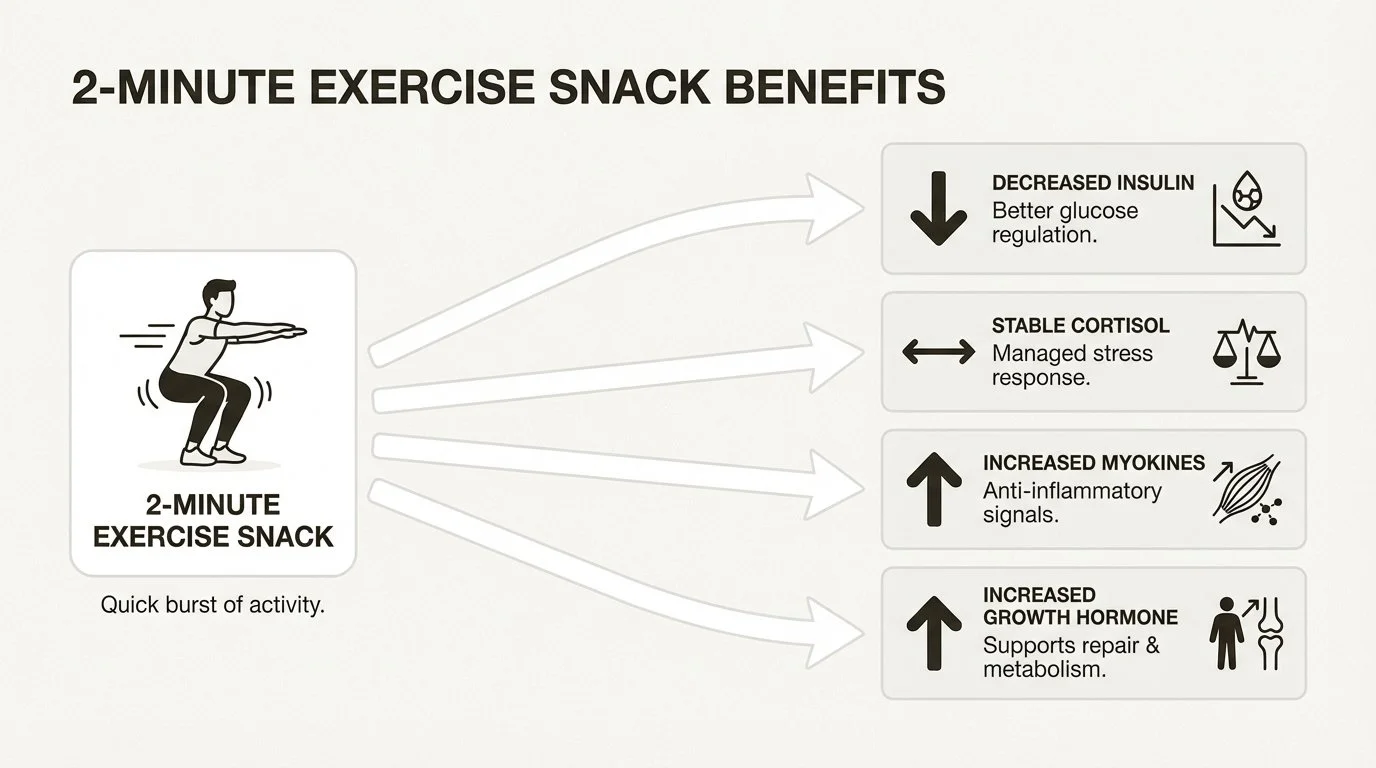
The real magic of exercise snacks happens at the hormonal and cellular level. While the calorie burn from a two-minute burst of activity might seem minimal, the metabolic signalling effects are significant.
Insulin and blood sugar regulation
Your muscles act like glucose sponges during movement, absorbing sugar directly from your bloodstream without requiring insulin. This insulin-independent glucose uptake happens through GLUT4 transporters, which move to the cell surface during exercise and shuttle glucose inside.
Timing matters here. Research from Sports Medicine shows that just two to five minutes of light activity after meals significantly improves glucose control in both healthy individuals and those with insulin resistance. One study found that a 10-minute walk immediately after eating reduced peak blood sugar compared to walking later or resting.
For people dealing with insulin resistance or prediabetes, this is significant. Exercise snacks help pull glucose into muscle tissue without requiring as much insulin, which means lower post-meal spikes and better metabolic flexibility over time.
Cortisol management
Long, intense workouts can trigger cortisol spikes in some individuals in certain situations. This matters because elevated cortisol promotes fat storage, particularly around the midsection, and can make weight loss feel like an uphill battle.
Exercise snacks avoid this stress response. The brief duration does not trigger the same cortisol cascade as extended cardio sessions. For women navigating perimenopause or menopause, when cortisol regulation already becomes more challenging, this gentler approach to movement can be particularly beneficial.
Metabolic flexibility and myokines
When you move regularly throughout the day, your muscles produce myokines, peptides that are released within three minutes of starting activity. These signalling molecules stimulate AMP-activated protein kinase, increase glucose uptake, improve fat breakdown (lipolysis), and have anti-inflammatory effects throughout the body.
This regular signalling tells your body that you are active and that it is safe to burn stored energy. Instead of conserving calories, your metabolism stays engaged. The cumulative effect of these micro-movements is an improved metabolic rate and better energy regulation.
Growth hormone and cardiovascular benefits
Short bursts of high-intensity activity stimulate the release of human growth hormone and insulin-like growth factor 1. These hormones support cardiovascular function, muscle adaptation, and cellular repair. A 2025 meta-analysis found that exercise snacks significantly improved VO2max (maximal oxygen uptake), a strong predictor of longevity and cardiovascular health.
What The Research Says
The scientific evidence for exercise snacks has grown substantially. A comprehensive 2025 meta-analysis published in the Scandinavian Journal of Medicine and Science in Sports analyzed 14 studies involving 483 participants and found significant improvements in several key markers.
The exercise snack group showed:
VO2max improvements
Peak power output enhancement
Total cholesterol reductions
LDL cholesterol decreases
Interestingly, the research found no significant changes in body weight or body fat percentage over the study periods (which ranged from 4 to 12 weeks). This might seem disappointing if weight loss is your primary goal, but it actually tells an important story. Exercise snacks improve the metabolic environment, insulin sensitivity, and cardiovascular fitness, but they are not a quick fix for fat loss.
The adherence data is perhaps most compelling. While many exercise programs see dropout rates of 50% or higher within six months, exercise snacks maintained 91% adherence in adults and 83% in older adults. When something is easy to do consistently, the long-term benefits compound.
Simple Ways To Add Exercise Snacks To Your Day
Starting an exercise snack practice does not require athletic ability or special preparation. The key is starting small and building consistency before increasing intensity or duration.
Getting started: The basics
Begin with one to two minutes of movement after one meal per day. That is it. It can be as simple as walking around your living room. Once that feels automatic, add another snack at a different time.
Frequency matters more than duration. Three to four short bursts throughout the day appear more beneficial for metabolic health than one longer session, particularly for glucose control.
Exercise snack ideas (no equipment needed)
Here are effective options you can do anywhere:
Stair climbing: The most researched exercise snack. Two minutes of brisk stair climbing activates large muscle groups and elevates heart rate effectively.
Bodyweight squats: 10 to 15 reps activate your largest muscle groups and boost GLUT4 transporters for glucose uptake.
Wall sits: Hold for 30 seconds to engage leg muscles without impact.
Brisk walking: Two minutes of purposeful walking, ideally after meals.
Counter push-ups: 10 to 15 reps using a desk or kitchen counter for upper body activation.
Marching in place: Two minutes of high-knee marching elevates heart rate without requiring space.
Timing strategies for maximum hormonal benefit
The post-meal window (15 to 30 minutes after eating) is optimal for glucose management. This is when blood sugar naturally peaks, and movement helps muscles absorb that glucose before insulin has to manage it.
For breaking up sedentary time, set a timer for every 45 to 60 minutes during desk work. Research shows that interrupting prolonged sitting has independent health benefits beyond the exercise itself.
Link your exercise snacks to existing habits to make them automatic: do high knees while you brush your teeth, take a brisk walk after lunch before returning to your desk, or do wall sits while your coffee brews.
Sample starter DAILY plan
Two minutes of high knee marching when you are brushing your teeth in the morning.
Walk around your home for 5 minutes after breakfast.
Walk around your home for 5 minutes after lunch.
Walk around your home for 5 minutes after dinner.
Walk around your home for 5-10 minutes before bed.
Two minutes of high knee marching when you are brushing your teeth before bed.
This is a total of 24 minutes of physical activity daily. You can scatter additional exercise snacks in if you like.
Sample 7-day starter plan
Monday: Walk in place for five minutes, 15 minutes after lunch and dinner.
Tuesday: Do 10 bodyweight squats every 45 minutes during work hours.
Wednesday: Hold wall sits for 30 seconds, three times after each meal.
Thursday: Take two-minute stair intervals (or brisk walk if no stairs) after breakfast and dinner.
Friday: Do 15 counter push-ups twice during the mid-morning and mid-afternoon.
Weekend: Choose active leisure like gardening, walking with family, or dancing to music.
Remember, this is a starting framework, not a rigid requirement. The goal is finding movement patterns you can sustain.
Who benefits most from exercise snacks?
While exercise snacks can support anyone's health, certain groups see particularly strong benefits.
Sedentary adults experience the most dramatic improvements. The 2025 meta-analysis found that physically inactive adults showed larger gains in VO2max and power output compared to those already active. If you are currently doing minimal structured exercise, exercise snacks offer the highest return on investment.
Midlife women navigating hormonal changes often find that long, intense workouts increase stress and inflammation without delivering proportional results. Exercise snacks provide metabolic stimulus without cortisol spikes, making them ideal for perimenopause and menopause when insulin sensitivity naturally declines.
People with insulin resistance or prediabetes benefit from the frequent glucose-clearing effects. Post-meal movement is one of the most underutilized tools for blood sugar management.
Those with limited time or gym access can finally stop feeling guilty about not exercising. Exercise snacks require no commute, no equipment, and no changing clothes.
Even active individuals benefit from breaking up sitting time. Research shows that structured daily exercise does not negate the harmful effects of prolonged sedentary behavior. Adding exercise snacks to an existing fitness routine addresses a different health variable.
One important note: Exercise snacks complement but do not replace strength training. Building and maintaining muscle mass remains essential, especially after 40 when age-related muscle loss accelerates. Consider exercise snacks your metabolic maintenance between strength sessions.
Start Supporting Your Hormones With Movement Today
Exercise snacks represent a shift in how we think about fitness. Instead of viewing exercise as something that requires perfect conditions, special clothes, and large time blocks, they make movement accessible, and sustainable.
The research is clear: these micro-doses of activity improve cardiovascular fitness, cholesterol profiles, insulin sensitivity, and metabolic flexibility. While they may not dramatically change your body weight in isolation, they create the internal environment where sustainable weight management becomes possible.
In Naturopathy, we believe in addressing root causes rather than chasing symptoms. Exercise snacks align perfectly with this philosophy. They work with your hormones, not against them. They fit into real life rather than demanding life rearrangement. And they build the foundation for lasting health changes.
If you are struggling with hormonal imbalances, stubborn weight, or metabolic concerns, exercise snacks might be the missing piece in your wellness puzzle. Combined with personalized naturopathic care that addresses nutrition, stress, sleep, and other lifestyle factors, they can help you achieve the energy and vitality you are seeking.
Frequently Asked Questions
Can exercise snacks alone help me lose weight, or do I need to combine them with diet changes?
Research shows that exercise snacks alone do not produce weight loss over 4 to 12 weeks. However, they improve insulin sensitivity, metabolic flexibility, and cardiovascular health, which creates a better internal environment for weight management. For meaningful fat loss, combine exercise snacks with dietary adjustments and adequate protein intake. Consider strength training.
How long should each exercise snack last to see benefits for my hormones and weight?
Studies show benefits starting at just 20 seconds of vigorous activity, with most research using bouts of 1 to 2 minutes. For cardiorespiratory improvements, bouts longer than 2 minutes appear more effective. Start where you are and build gradually. Consistency matters more than duration.
Are exercise snacks effective for hormone balance during menopause?
Yes, exercise snacks are particularly well-suited for menopause. They improve insulin sensitivity (which naturally declines during this phase) without triggering cortisol spikes that can worsen belly fat storage. The gentle, frequent approach works with your changing hormones rather than against them.
What is the best time of day to do exercise snacks for weight loss and hormonal health?
The post-meal window (15 to 30 minutes after eating) is optimal for blood sugar management and metabolic health. However, any time you have been sitting for 45 to 60 minutes is also beneficial for breaking up sedentary time. The best time is one you will actually do consistently.
How quickly will I notice hormonal changes from doing exercise snacks?
Cellular changes like increased plasma volume and improved capillary function begin within two weeks. Glucose regulation improvements can be noticeable immediately after post-meal movement. Longer-term hormonal adaptations, such as improved insulin sensitivity and metabolic flexibility, typically require 4 to 12 weeks of consistent practice.